

AndaSeat Labor Day 2026 Highlights Kaiser 4 as New Research Refocuses Computer Ergonomics on Upper-Body Support
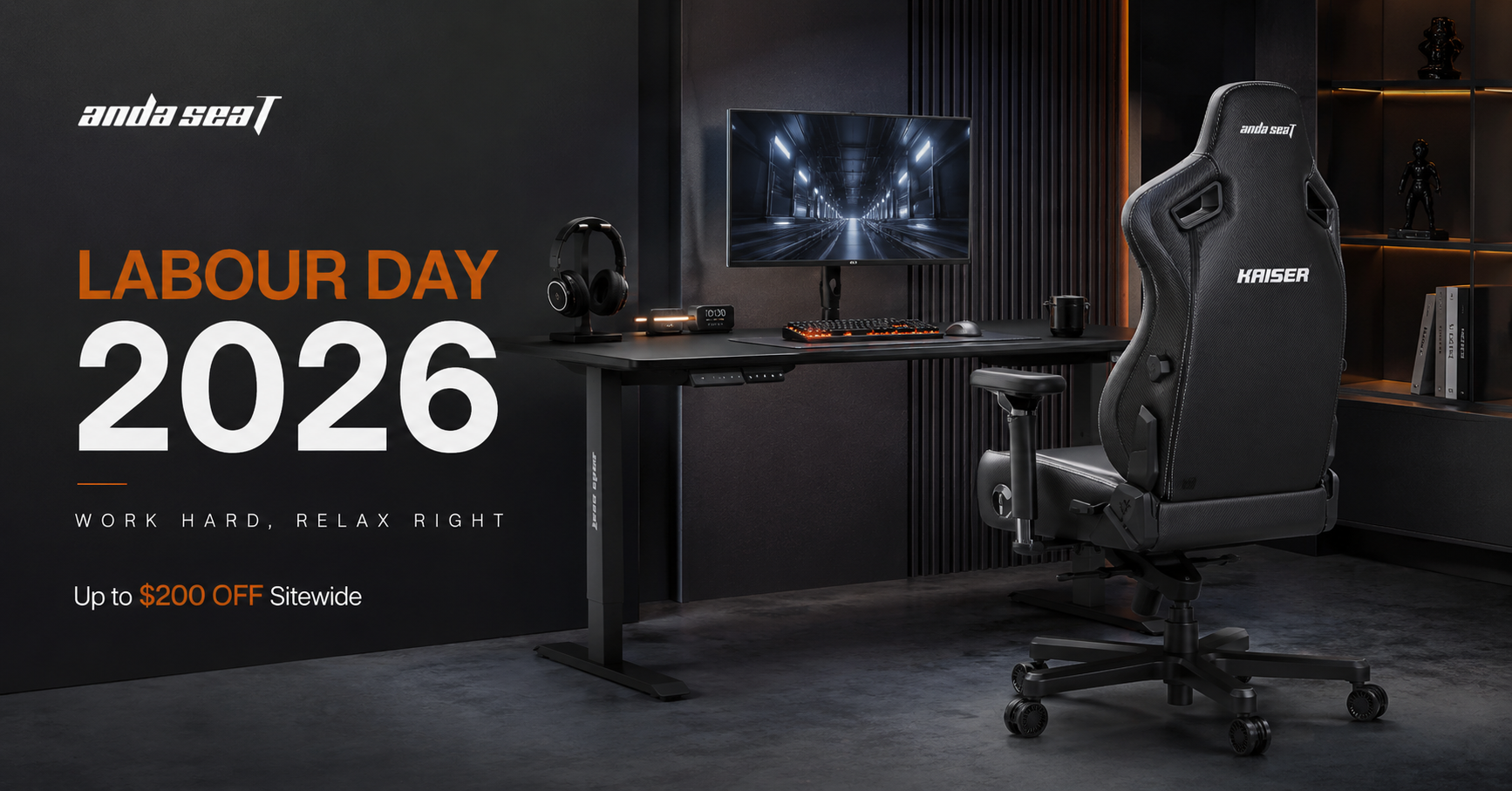
2026 Labour Day Kaiser 4
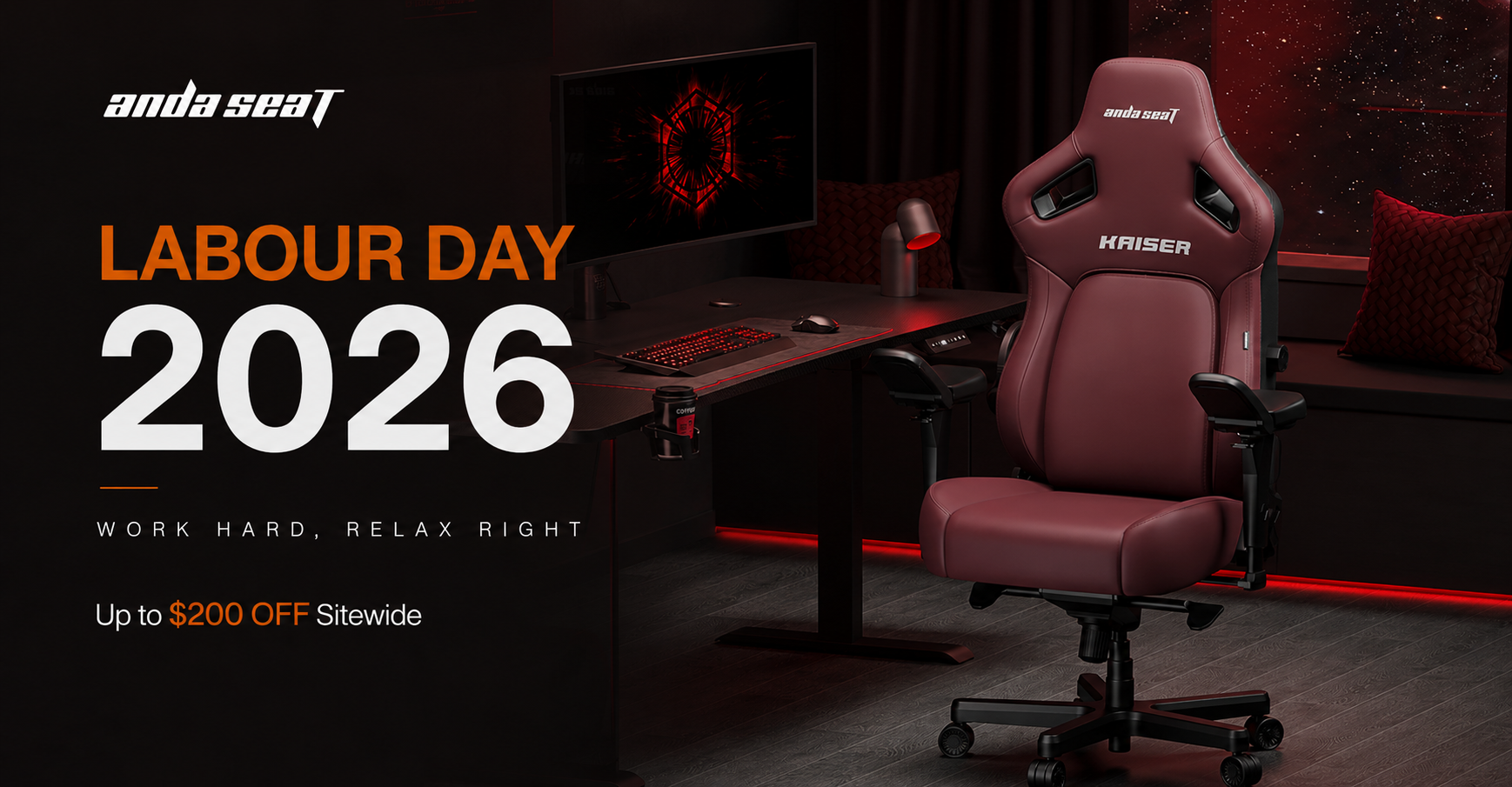
2026 Labour Day Kaiser 4 AndaSeat
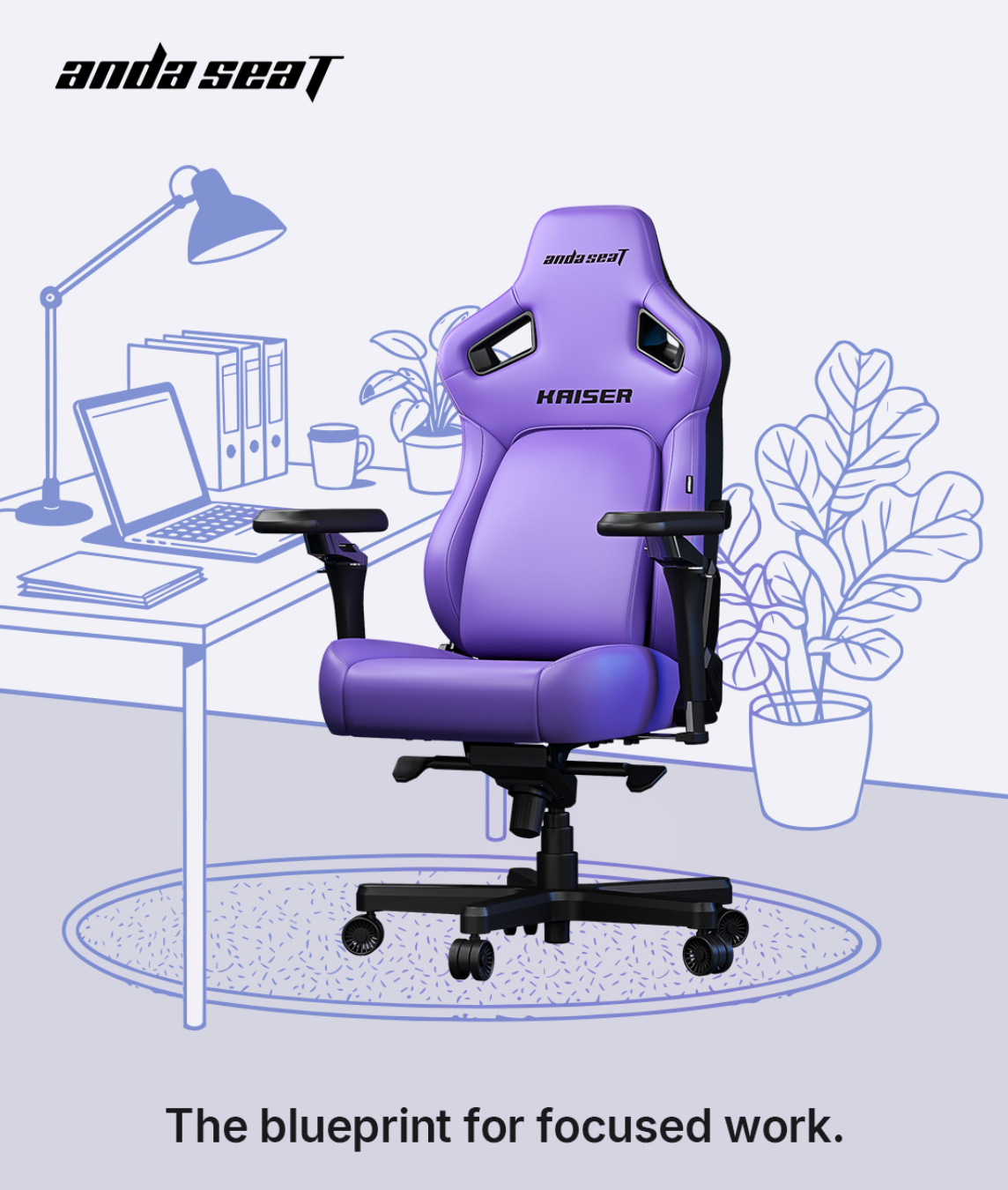
2026 Labour Day Kaiser 4 AndaSeat Purple
AndaSeat Labor Day 2026 Highlights Kaiser 4 as New Research Refocuses Computer Ergonomics on Upper-Body Support
SPOKANE, WA, UNITED STATES, September 1, 2026 /EINPresswire.com/ -- Ahead of Labor Day in the United States, AndaSeat launched its 2026 Labor Day Event. The company is placing particular focus on the upgraded Kaiser 4 Series and a changing ergonomics discussion around computer work: effective seating support involves more than the lower back.That issue has gained new research attention in 2026. A systematic review and meta-analysis published in June examined prospective studies of workers who regularly use computers. The researchers found that computer or mouse use exceeding four hours per day was associated with a pooled relative risk of 1.25 for complaints involving the arm, neck and shoulder region. The authors concluded that prolonged computer use was a significant predictor of these complaints and highlighted the role of ergonomic interventions in sedentary occupational environments.
The finding is relevant as computer work continues across both conventional workplaces and homes. The U.S. Bureau of Labor Statistics reported in June 2026 that 35% of employed people did some or all of their work at home on days they worked in 2025. On days when employed people worked, they averaged 7.66 hours of work.
These figures do not establish that a particular chair can prevent musculoskeletal complaints. They do, however, reinforce a broader workstation-design question: if computer use involves the shoulders, arms, forearms, wrists and back simultaneously, should chair adjustment focus primarily on lumbar support?
AndaSeat developed the upgraded Kaiser 4 around a more distributed support model, pairing its gas-spring lumbar mechanism with an expanded 6D armrest system and adjustable backrest, head support and seat structure.
Computer Ergonomics Extends Beyond the Lower Back
Lumbar support has become one of the most recognizable features in ergonomic seating, but computer interaction places demands farther up the body.
OSHA identifies the positioning of armrests as one factor that can influence the neck, shoulders and arms. Armrests that are too low can encourage the user to lean to one side; armrests positioned too high may contribute to elevated shoulders; and armrests that are too wide may require the elbows to reach outward for support. Large or poorly positioned armrests can also prevent a chair from moving close enough to the keyboard.
OSHA therefore recommends positioning adjustable armrests so they support the lower arms while allowing the upper arms to remain near the torso and the shoulders to remain relaxed.
This creates an adjustment problem that cannot be solved through back support alone.
Desk height, shoulder width, keyboard position and mouse placement can change where the forearm naturally meets the chair. A fixed armrest may therefore provide useful contact in one configuration while becoming less suitable after the user changes desk position or task.
6D Armrests Expand the Forearm-Support Envelope
The upgraded Kaiser 4 addresses this area through its 6D armrest system.
The arm pads rotate through 180 degrees, while the complete arm structures can rotate through 360 degrees. The pads also provide a 20-degree upward tilt. Linear adjustment includes 7 cm of vertical movement and 4 cm of forward-and-back travel, while rotation creates up to 18 cm of lateral positioning range.
These movements serve different parts of upper-body fit.
Vertical adjustment changes the relationship between the forearm, shoulder and desk. Forward-and-back movement allows the contact point to follow where the elbows naturally rest. Rotation changes the direction of support, while the wider lateral range allows the armrests to accommodate different shoulder widths and hand positions.
The system also incorporates locking controls so the selected armrest position can remain defined after adjustment.
The purpose is not to establish one universally correct arm angle. It is to give users a larger adjustment envelope in which the forearms can be supported without requiring the shoulders and elbows to conform to one fixed chair geometry.
Live Lumbar Adds a Separate Layer of Back Adjustment
Kaiser 4’s upgraded lumbar system operates independently from the armrests.
The mechanism uses an elastic locking gas spring and provides a 24-degree pop-out range. Unlike the earlier four-position version, the upgraded structure can be locked at any selected angle within that range. Inside the pop-out unit, separate controls provide 76 mm of vertical adjustment and 30 mm of depth adjustment.
The distinction between arm and lumbar adjustment is central to the product concept.
Changing armrest height should not automatically determine the amount of lower-back contact. Likewise, increasing lumbar projection should not require the user to alter shoulder or elbow position.
The Kaiser 4 therefore divides support into independently configurable regions.
The armrests address the relationship among the forearms, shoulders and work surface. The lumbar system addresses where and how strongly the lower back contacts the backrest.
This is particularly relevant to computer users whose working position changes throughout the day. The BLS data show that work itself is increasingly distributed between workplaces and homes, meaning chair and desk conditions may vary even for the same worker.
Recline and Head Support Extend Adjustment Above the Lumbar Region
The same distributed-support principle continues through the upper section of the chair.
Kaiser 4 provides up to 135 degrees of backrest recline together with a 15-degree rocking mode. A magnetic memory-foam head pillow includes a cooling layer and approximately 20 cm of vertical attachment range.
These components allow upper-body contact to be reconsidered when the torso angle changes.
A more upright backrest position changes the relationship among the head, shoulders, lumbar area and armrests compared with a reclined position. Repositionable head support can therefore be useful because the location at which the head meets the chair does not necessarily remain identical across every backrest angle or user height.
The recline and rocking systems do not replace standing, walking or active breaks from computer work. OSHA continues to identify prolonged static and awkward postures as ergonomic risk factors, while contemporary research also supports incorporating movement and task variation into computer-based work.
The Kaiser 4 functions within the time users remain seated by allowing multiple support points to be adjusted rather than relying on one fixed configuration.
Material and Structure Support Repeated Daily Use
The upgraded Kaiser 4 retains high-density cold-cure foam, an aluminum wheelbase and 65 mm polyurethane-coated casters. Upholstery options include synthetic leather and EverSoft linen fabric.
AndaSeat’s current leather specification uses a three-layer construction consisting of a surface topcoat, foam intermediate layer and textile backing. The company reports material testing including 2,000 Taber wear cycles and 100,000 Martindale rub cycles. These are manufacturer-reported material tests rather than guarantees of a specific service life.
The Kaiser 4 platform also received a Gold award in the Product Design – Workplace & Office category of the 2024 French Design Awards. The award predates the current 6D armrest and any-angle lumbar upgrades, so it is presented as recognition of the Kaiser 4 design platform rather than independent evaluation of the newer mechanisms.
Labor Day Brings the Worker Back Into the Ergonomics Discussion
Labor Day traditionally centers attention on workers. In 2026, the physical context of computer-based work remains increasingly distributed: some work occurs at employer workplaces, while a substantial share of employees also work from home for at least part of their working days.
At the same time, new occupational research is reinforcing that computer ergonomics should not be reduced to one region of the body.
The upgraded Kaiser 4 reflects that broader view.
Its 6D armrests provide a larger range for forearm positioning. Its gas-spring lumbar mechanism independently controls lower-back contact. Recline, rocking and repositionable head support address changes elsewhere along the seated upper body.
None of these systems eliminates the need for appropriate workstation setup, movement breaks or professional assessment when symptoms occur. Their role is mechanical: providing more independently adjustable contact points in a chair intended for extended computer, creative and gaming use.
About AndaSeat
Founded in 2007, AndaSeat develops ergonomic seating and workspace products for gaming, professional and home environments. Its portfolio includes ergonomic chairs, standing desks, monitor arms and related workspace accessories. AndaSeat’s product-development approach combines adjustable support systems, structural engineering, material development and user-focused workspace design.
AndaSeat Marketing
AndaSeat
email us here
Visit us on social media:
LinkedIn
Instagram
Facebook
YouTube
TikTok
X
Legal Disclaimer:
EIN Presswire provides this news content "as is" without warranty of any kind. We do not accept any responsibility or liability for the accuracy, content, images, videos, licenses, completeness, legality, or reliability of the information contained in this article. If you have any complaints or copyright issues related to this article, kindly contact the author above.
