

Breast Cancer in Young Women: New Digest Reframes Biology, Early Detection, Research, and Lifelong Care
Reframing Breast Cancer in Young Women Evidence Series
Examples of Reframing Elements
Reframing Breast Cancer in Young women
BCYW Foundation brings together 20 perspectives on risk, diagnosis, fertility, and survivorship—connecting science with young women’s needs.
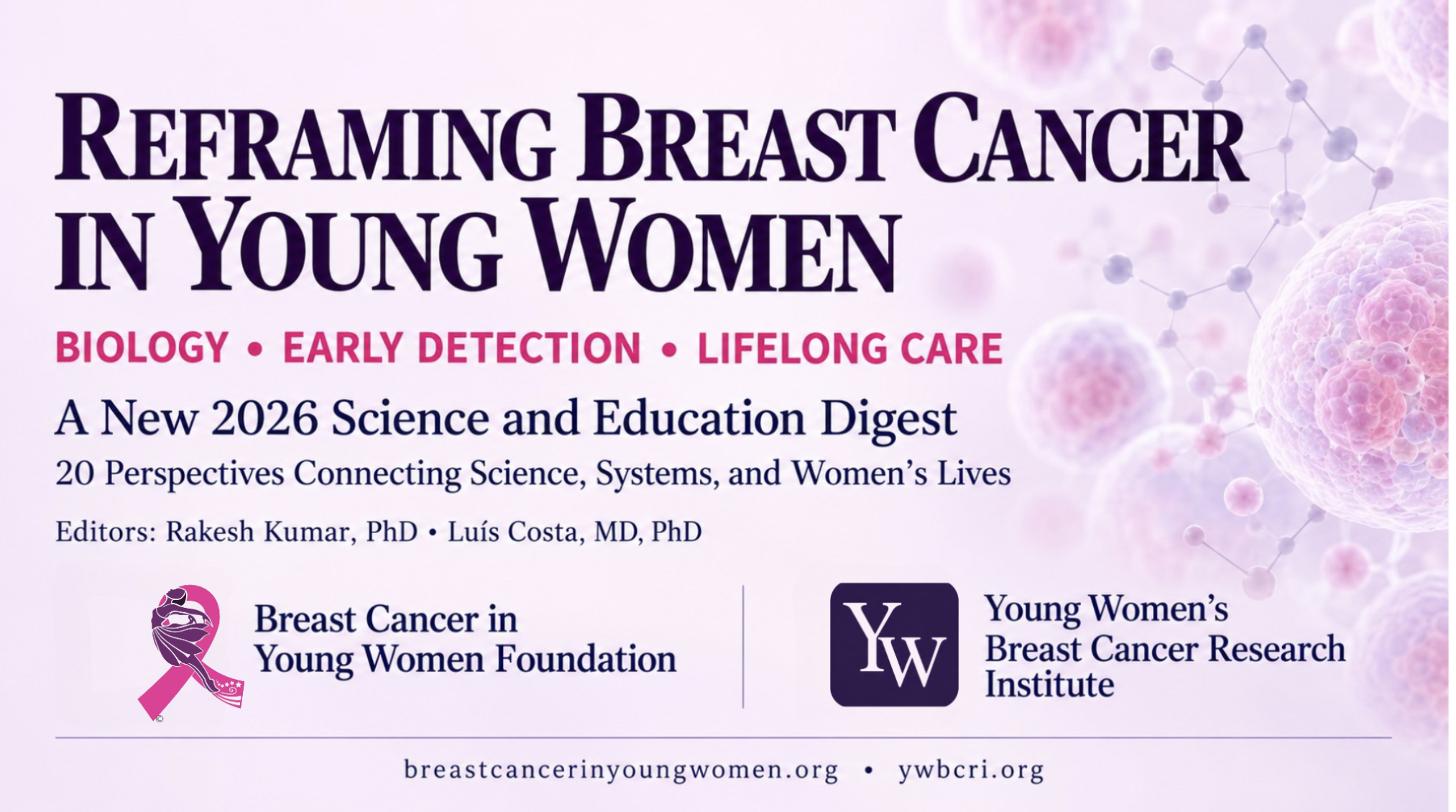
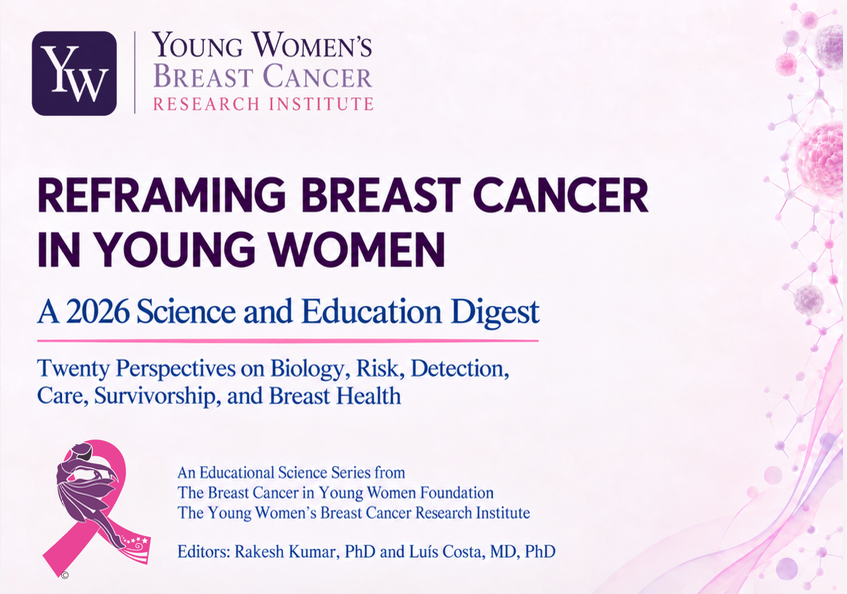
DENVER, CO, UNITED STATES, November 3, 2026 /EINPresswire.com/ -- Breast cancer in young women is often described as the same disease occurring earlier in life. But that framing leaves key questions unanswered: how the biology differs, whose experiences the research reflects, why diagnosis may be delayed, and what care should address when treatment affects fertility, careers, relationships, and decades of future health.The Breast Cancer in Young Women Foundation (BCYW Foundation) and the Young Women’s Breast Cancer Research Institute (YWBCRI) are jointly releasing “Reframing Breast Cancer in Young Women: A 2026 Science and Education Digest” to explore those questions. Edited by Rakesh Kumar, PhD, and Luís Costa, MD, PhD, the publication brings together twenty perspectives to foster a cohesive discussion of science, individual needs, and institutional responsibility.
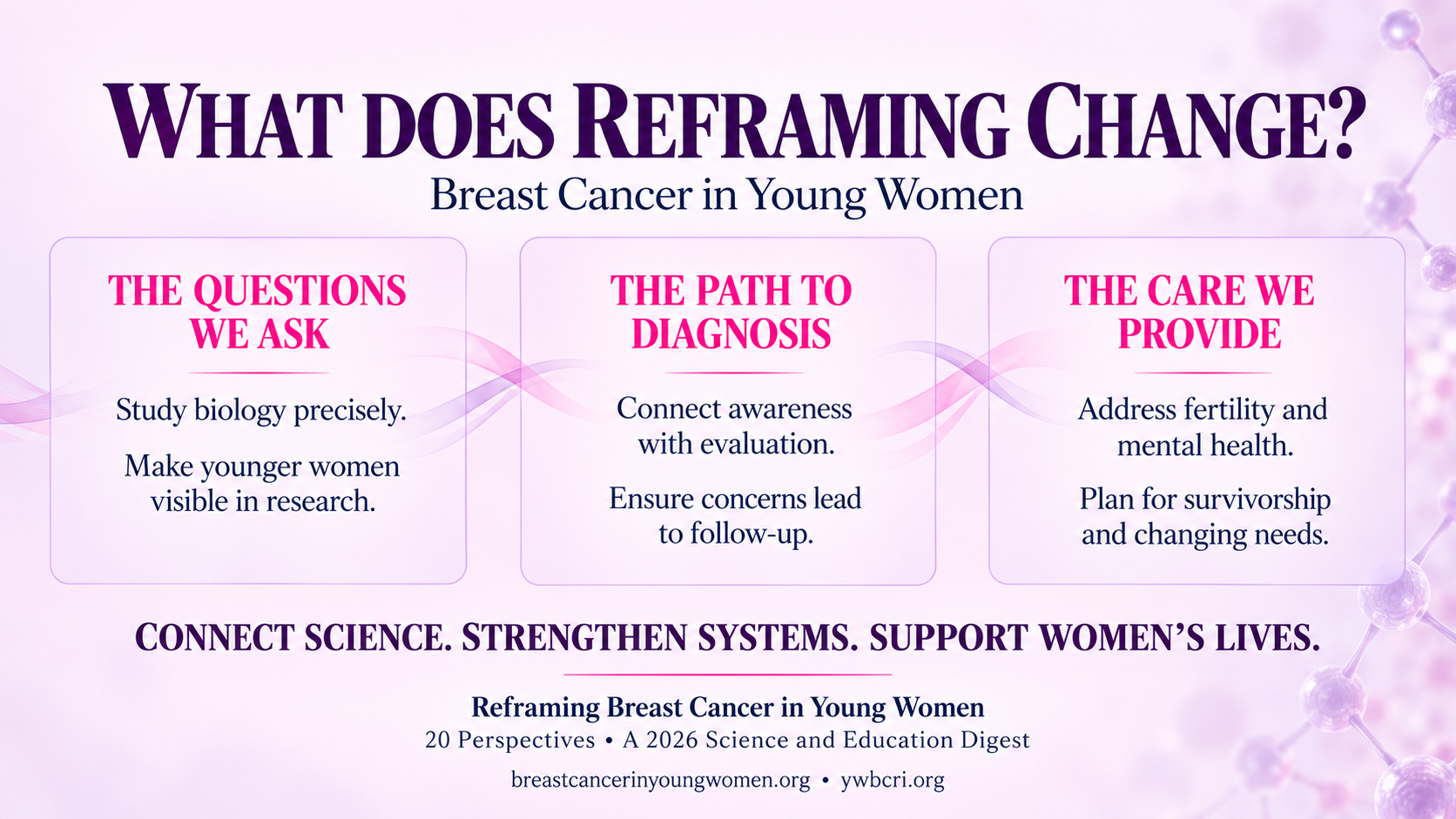
The digest’s central vision is that improving outcomes requires rethinking how we define the challenge. Earlier detection, more precise research, individualized treatment, and sustained support depend on one another. Progress in one area can fall short if the surrounding services cannot respond.
REFRAMING WHO THE EVIDENCE DESCRIBES
The collection opens with epidemiology and biology, then explores inherited susceptibility, metabolic health, environmental and lifestyle exposures, and prevention throughout early life.
A recurring theme is the need for precision. “Young women,” “early-onset,” and “premenopausal” refer to overlapping populations, but not to the same biological or clinical circumstances. Broad age categories can obscure distinctions that matter for interpreting research and providing care.
The digest emphasizes the need for clear definitions, meaningful representation in clinical studies, and age-specific reporting. It also warns against replacing one generalization with another: breast cancer in young women remains heterogeneous, and chronological age cannot replace an individual assessment.
“A breast cancer diagnosis early in adulthood raises questions that can last a lifetime,” said Rakesh Kumar, PhD, Founder and President of BCYWF and Scientific Director of YWBCRI. “Research must ensure younger women are represented in the evidence, and health systems must address their needs—from the first concern through treatment and survivorship. This digest brings these responsibilities together in one conversation.”
BIOLOGY NEEDS PRECISION, NOT ASSUMPTIONS
The collection examines shifting epidemiology, early-onset tumor biology, inherited risk beyond BRCA, metabolic health, and environmental and lifestyle exposures. It encourages readers to distinguish established evidence from emerging hypotheses and population-level associations from individual causes.
The series also addresses a recurring challenge in research and communication: “young,” “early-onset,” and “premenopausal” refer to overlapping populations, but they are not interchangeable. Findings from broad age groups may not adequately represent women under 40. Clear definitions and age-specific reporting can reveal differences that pooled results may obscure.
The digest also cautions against viewing breast cancer in young women as a single biological disease. Individual tumor characteristics, inherited susceptibility, ovarian function, and personal circumstances remain essential to interpreting the disease and making treatment decisions.
Prevention discussions receive similar scrutiny. Education should support informed choices without suggesting that every cancer is preventable or blaming women who develop the disease.
CONNECTING BREAST HEALTH AWARENESS WITH TIMELY DIAGNOSIS
The publication examines diagnostic delays, screening approaches, risk prediction, artificial intelligence, and biomarkers through a broader question: what helps a young woman receive appropriate care when she needs it?
Awareness is one part of the answer. Clinical listening, diagnostic capacity, referral pathways, affordability, and follow-up matter too. Eligibility for routine screening should never prevent the evaluation of a concerning symptom.
The same perspective applies to emerging technologies. Promising methods must demonstrate clinical value and fit within services equipped to provide further investigation and treatment. The digest therefore considers innovation alongside validation, access, and its practical consequences for patients.
Its discussions of prevention likewise distinguish established evidence from emerging hypotheses. The aim is to support informed decisions without causing unnecessary alarm or false reassurance or implying that women are responsible for every risk they face.
CARE BEYOND THE TUMOR: FERTILITY, WELL-BEING, AND SURVIVORSHIP
Several articles examine what a diagnosis means in early adulthood. Fertility, identity, employment, mental health, sexual health, and family responsibilities can influence immediate decisions and long-term recovery.
Long-term survivors may need support for decades. Women living with metastatic disease face ongoing treatment, uncertainty, and evolving practical needs. Both experiences call for care that adapts over time, rather than ending at a single milestone.
“Chronological age is a starting point, not a complete clinical description,” said Luís Costa, MD, PhD, co-editor of the digest. “Tumor biology, inherited susceptibility, ovarian function, and reproductive goals can differ substantially among women of the same age. Better care begins by understanding those differences and using evidence precisely enough to guide each woman’s decisions.”
TURNING SCIENTIFIC KNOWLEDGE INTO BETTER CARE
The final perspectives extend beyond individual clinical encounters to examine global disparities, universities, coordinated care pathways, and health strategy. They explore how education, research, and service delivery can reinforce one another.
Universities and community organizations can help people learn about breast health earlier. Researchers can make evidence more relevant, while clinical teams and policymakers work to improve access to and continuity of care. Young women and adolescents should help shape these efforts by sharing their questions, experiences, and priorities.
The digest summarizes twenty LinkedIn Pulse articles, offering key insights, selected references, and links to the original publications. It supports discussion among young women, families, healthcare professionals, researchers, educators, advocates, and institutions.
For BCYWF and YWBCRI, reframing means asking broader questions while clarifying responsibilities: whose biology is studied, whose concerns are heard, and whether scientific progress supports both survival and the life a woman hopes to lead.
ACCESS THE EVIDENCE DIGEST
The digital book is available without charge through the websites of both organizations:
Young Women’s Breast Cancer Research Institute
https://ywbcri.org
Direct book link: https://breastcancerinyoungwomen.org/docs/evidence-education-library/reframing-breast-cancer-young-women.pdf
Breast Cancer in Young Women: Resources, Evidence and Education Library
https://breastcancerinyoungwomen.org/resources/
ABOUT
The Breast Cancer in Young Women Foundation is a United States–based nonprofit organization dedicated to saving young women's lives through targeted awareness, education, advocacy, early detection, and scientific research. It brings together clinicians, scientists, nurses, survivors, advocates, NGOs, and partners from 35 countries. It advances targeted awareness and research and highlights emerging advances in BCYW through its peer-reviewed, open-access journal, Young Women's Breast Cancer and Health (YWBC). One of the foundation's programs, the Youth Council for Breast Health (YCBH), promotes targeted awareness on educational campuses. Through evidence-based analysis, the Foundation works to improve outcomes and long-term survivorship for young women diagnosed with breast cancer.
The Young Women's Breast Cancer Research Institute (YWBCRI), a research initiative of the BYW Foundation, advances collaborative research on the earliest biological changes that precede breast cancer. It focuses on early breast biology, metabolic drivers, and opportunities to predict risk, prevent disease, and enable early intervention. The Institute aims to connect discoveries about how disease begins with approaches that could help identify and intercept risk earlier.
DISCLAIMER: Featured studies and their accompanying highlights and infographics summarize key findings. For complete study data, methodology, and interpretation, readers should consult the cited original publications. This information is provided for educational purposes only and does not substitute for the need for professional medical advice and consulting a doctor with your concerns and doubts.
Rakesh Kumar, Ph.D., Founder and President
Breast Cancer in Young Women Foundation
+1 303-726-8463
bcywf@breastcancerinyoungwomen.org
Visit us on social media:
LinkedIn
Bluesky
Instagram
Facebook
YouTube
X
Legal Disclaimer:
EIN Presswire provides this news content "as is" without warranty of any kind. We do not accept any responsibility or liability for the accuracy, content, images, videos, licenses, completeness, legality, or reliability of the information contained in this article. If you have any complaints or copyright issues related to this article, kindly contact the author above.
